The Mutua Madrileña Foundation supported TRAINER for rehabilitation with brain-robot interfaces
TRAINER forms part of Scignabot’s work on brain-robot interfaces for neurorehabilitation.
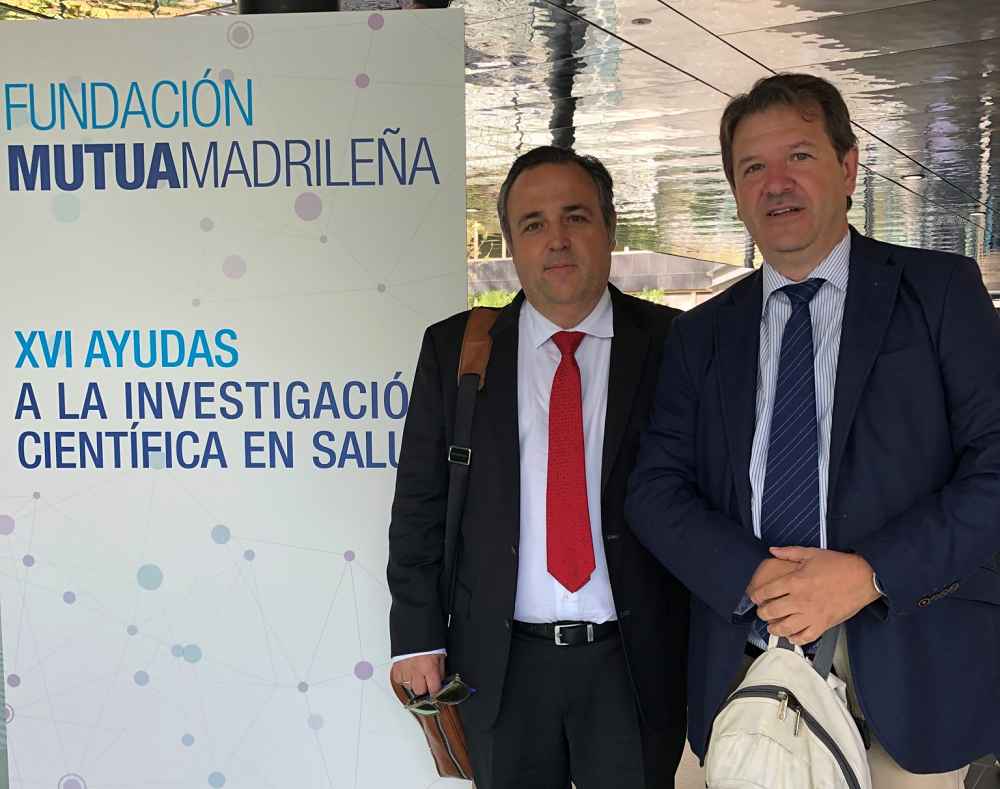
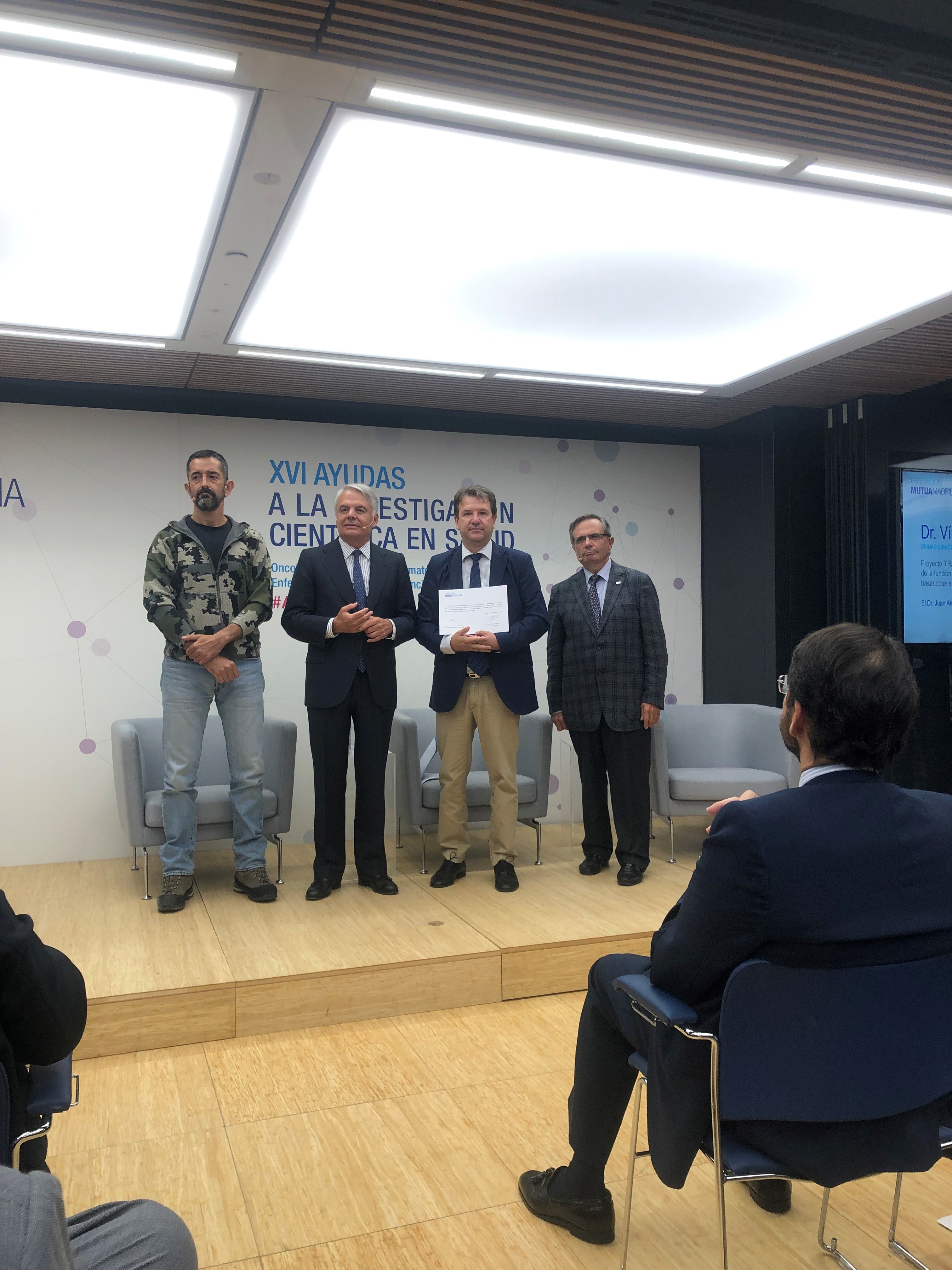
The Mutua Madrileña Foundation awarded 60,000 euros in 2019 to the project “Trainer: Motor rehabilitation of the upper limb using a brain-robot interface”, in which researchers from the Miguel Hernández University (UMH) of Elche Nicolás García Aracil and Juan Antonio Barios Heredero participated . The delivery of this economic endowment took place in Madrid, during the celebration of the XVI Grants for Scientific Research in Health Matters, granted by the Foundation.
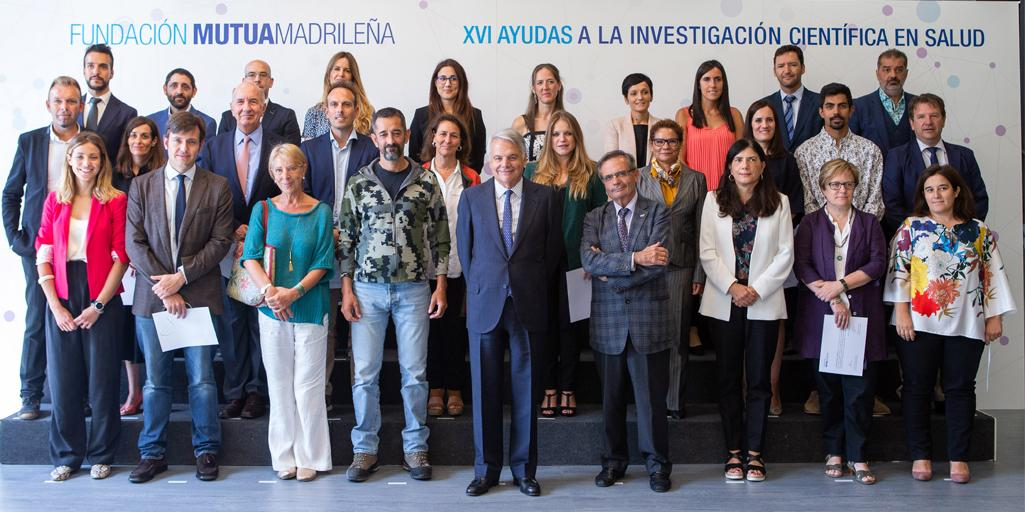
Group photograph at the 2019 ceremony for the Mutua Madrileña Foundation’s 16th Scientific Research in Health Grants.
In addition to the UMH, the Fundación San José Hospital and the Madrid Neurological Sciences Unit participated in this project. It was carried out in the Laboratory of New Technologies, together with the Brothers of San Juan de Dios, located in the San José Institute Foundation, a chronic hospital located in the La Fortuna neighborhood of Madrid. The objectives pursued in this research work were to design, test and validate a system to improve the recovery of the motor function of the upper extremities for patients who have suffered an acquired brain injury, based on the integrated use of robotic rehabilitation systems. and brain-robot interfaces.
The Trainer project aimed to support functional recovery and reduce the social and economic burden of acquired brain injury. The social costs of acquired brain damage, especially when the cause of the brain damage is vascular disease, are very high due to the cost of job loss and the emotional cost in the affected families. Therefore, advancing in the understanding of the processes that underlie functional recovery after brain damage is a great challenge for neurobiology and clinical neurology and is one of the challenges of European and international research policies. This project, in which the UMH participated and Scignals collaborated, aimed to better understand these processes and improve those of neurorehabilitation, which would mean a huge improvement in patient care and, consequently, a reduction in costs. In addition, it would facilitate a more bearable healthcare activity during the chronic phase of the disease.
For background, read Perineuro on how the brain reorganizes after a stroke (in Spanish).